
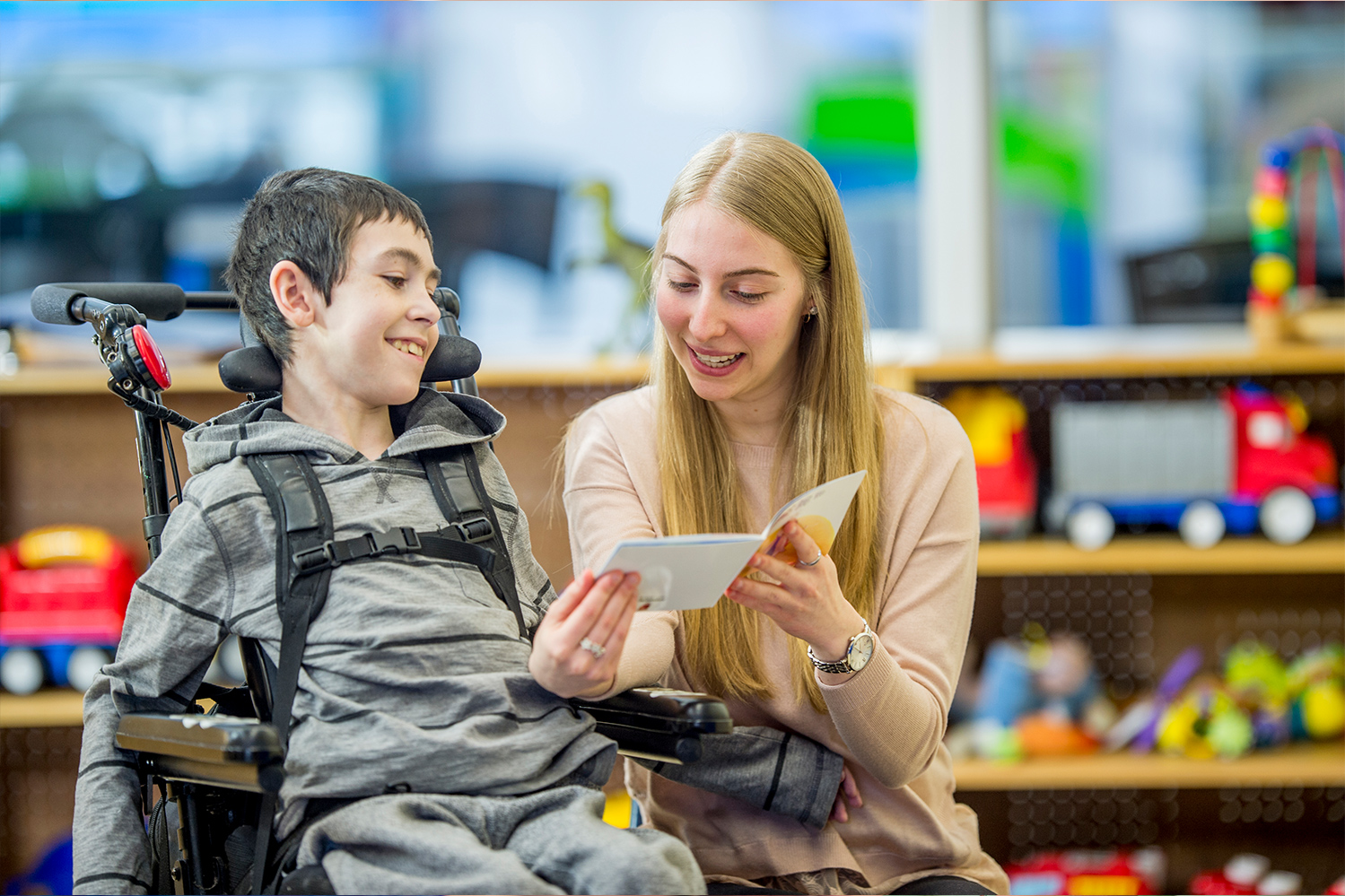


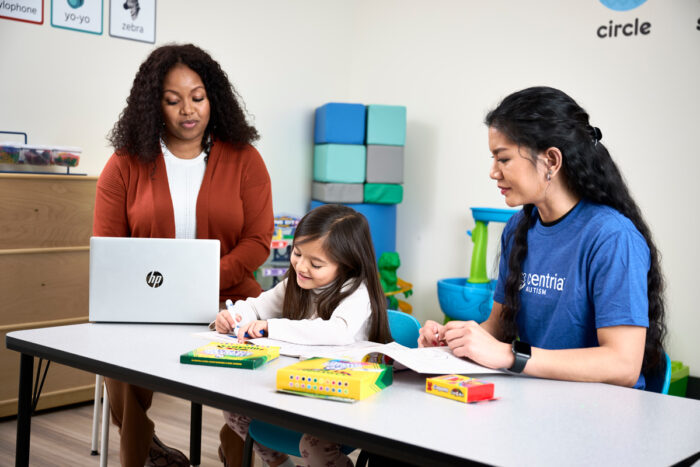
Play is more than just fun—it’s how children learn, connect, and grow.
For children with Autism Spectrum Disorder (ASD), play may look different, and that’s okay! The most meaningful play happens when we meet children where they are and gently introduce new ways to explore, expand, and enjoy play.
When we expand “beyond the toy box,” we discover that play isn’t one-size-fits-all. So let’s invite silliness, embrace new experiences, and create connections together.
Observe and Meet Them Where They Are
Observe your child’s natural interests and how they currently engage with items. This knowledge is the foundation for meaningful connection.
- Repetitive or Sensory: Are they putting items in their mouth, repetitively spinning toys, or focused on motion (spinning, running, jumping)?
- Structured Play: Are they interested in figurines, vehicles, or blocks, but tend to line them up neatly or play the same way every time?
- Exploring Boundaries: Are they drawn to dumping, splashing, or engaging with things that are unsafe or messy (e.g., toilet water, pouring out products)?
Parent Tip: Think of play as a dance. Sometimes you follow, sometimes you lead, and sometimes you both discover a new step together. If they don’t choose toys, offer a safe, similar option for play.
Sensory Play
Sensory play helps children explore textures, sounds, and movement. Water play with cups, spoons, or toy boats (splash, pour, drip). This is a fantastic alternative for children who mouth or enjoy repetitive actions.
- Playdough: squishing, rolling, and cutting.
- Sensory Bins: Sand bins, rice/bean bins, for scooping and pouring.
- Water/Wet Play: Use whipped cream, shaving cream or water for splashing, pouring, dripping, and smearing.
Parent Tip: To spark curiosity, try hiding small toys in rice or beans and saying “Can you find it?” This subtly encourages a search-and-find element.
Closed-Ended Play (Toys with a Clear Goal)
This type of play is perfect for children who thrive with structure and the feeling of a “finished” task. It helps teach concepts like fit, order, and cause-and-effect.
- Sorting and Stacking: Shape sorters and stacking cups.
- Puzzles: Simple inset or floor puzzles, pegs or button pressing toys.
- Cause-and-Effect: Building block towers (crash!) and rebuilding.
Parent Tip: Once your child completes a task (like stacking a tower), you knock it over dramatically and giggle together. Modeling laughter helps show that flexibility and change can be fun and exciting, not just frustrating.
Gross Motor Play
These big body games don’t just get energy out—they also strengthen your engagement and connection as you laugh and move together. Shared movement is a powerful bonding experience.
- Movement Games: Rolling or kicking soft balls, jumping, animal chase, tickles.
- Obstacle Course: Creating mini courses with pillows, tunnels, or cushions.
- Music and Movement: Songs with movements or simple dance.
Parent Tip: Add pretend play into movement to build imagination: “Hop like a bunny!” or “Fly like a superhero!”
Songs and Rhymes
Music makes play predictable and fun. The rhythm and repetition help with language anticipation and can provide a calming, familiar structure.
- Classics: Itsy Bitsy Spider or Wheels on the Bus.
- Interactive Songs: Freeze dance (stop! … go!) or clap-along songs
Parent Tip: Build-in pauses. Give your child a moment to see if they fill in the next word or motion. This is a gentle, pressure-free way to encourage communication.
Pretend Play & Functional Activities
Pretend play builds imagination and foundational social understanding by allowing children to practice roles and scenarios they observe.
- Caring Roles: Doctor kits, caring for dolls, or “feeding” stuffed animals.
- Household Roles: Pretend kitchen, store play, or dressing up as favorite characters.
Parent Tip: If your child loves lining up toy food, join in first—then “pretend taste” one of the items and say, “Mmm, yummy!” You meet them in their comfort zone, then gently introduce a new action.
Numbers & Letters Play
Play-based learning takes the pressure off academics and integrates skills like counting, sorting, and sequencing into activities. Predictability and repetition in this area build confidence.
- Letter/Number Items: Alphabet puzzles, foam letters, or magnets.
- Counting: Counting stairs, toys, or snacks together.
- Songs: Singing the ABCs or counting songs like One Little Finger.
Parent Tip: Build-in variation. Once your child expects a certain song or sequence, switch it up: sing fast and slow, count out of order, or make up your own silly words. This fosters flexibility.
Adding Value During Play
- Celebrate the good. When your child shares, looks at you, or tries something new, cheer them on!
- Redirect gently. If play gets repetitive or tricky, model a fresh way to use the toy (e.g., rolling stacking rings back and forth instead of stacking them).
- Be flexible. Some days your child may lead the play. Other days, they might let you guide. Both are wins.
- Focus on Choices: If possible and safe, focus on what your child CAN DO with an item or what IS A CHOICE to prevent frustration.
The Takeaway
Play doesn’t have to look one “right” way. “Beyond the toy box,” you’ll find connection, confidence, and joy. Which new step will you try in your child’s play this week?”
About the Author
Katie George is the Director of Clinical Services at Life Skills Autism Academy in Nottingham, Maryland. Committed to compassionate, family-centered care, Katie focuses on developing creative and fun ways for children to learn and grow. She mentors clinicians in utilizing evidence-based practices and is passionate about ensuring every child is celebrated for exactly who they are. In her free time, she enjoys ocean air, reading science fiction, art, music, movement arts, and spending time with friends, family, and animals.